
Sports Injury Physiotherapy in Noida
Sports injury physiotherapy in Noida for sprains, strains, and overuse injuries. Assessment-led rehab at Ayursoul Physiotherapy, Sector 75. Book your visit.
Visit Ayursoul Physiotherapy Clinic
Ayursoul Healthcare, Spectrum Mall, Sector 75, Noida, Uttar Pradesh
Open daily: 10:00 AM – 8:00 PM
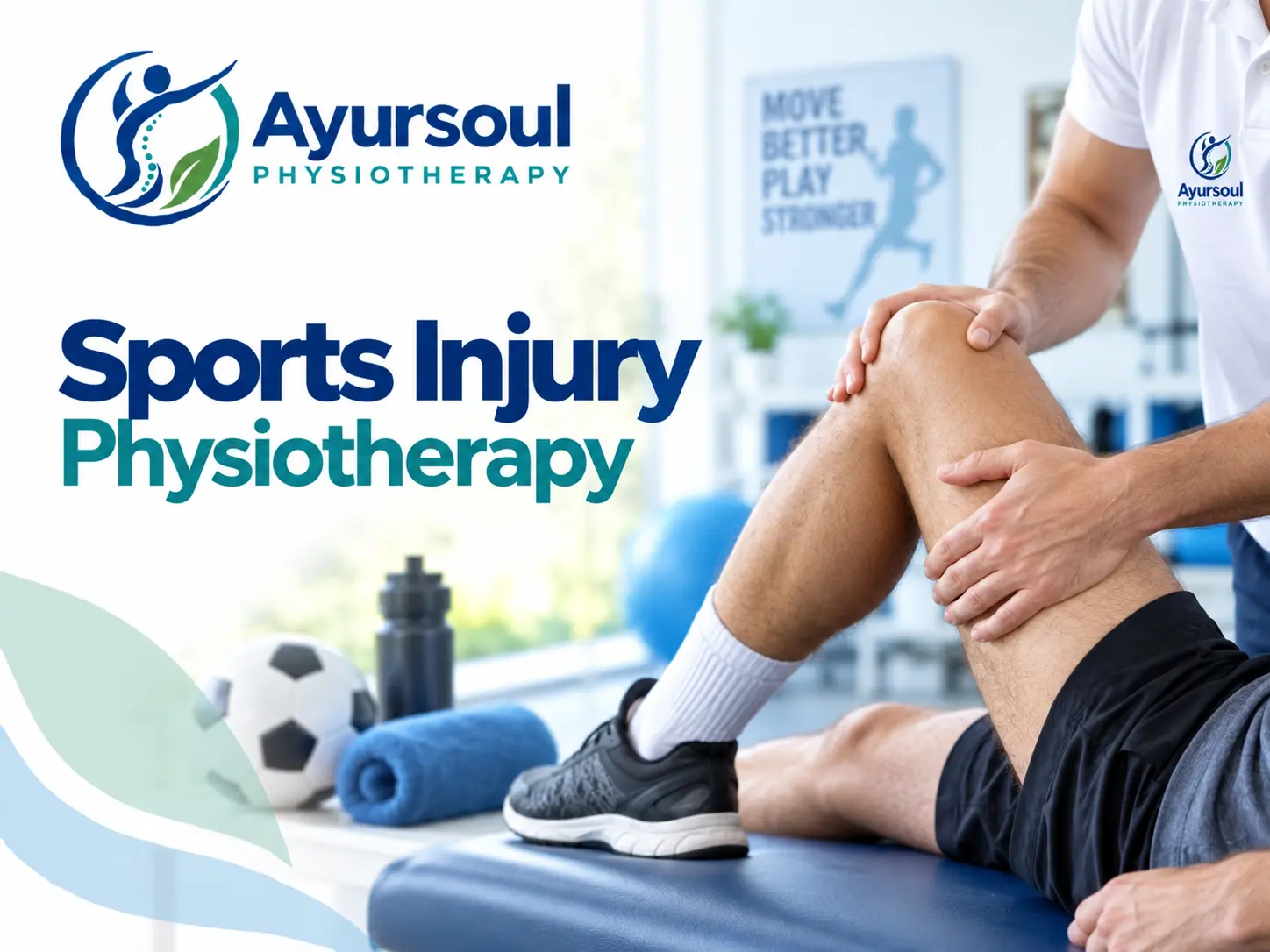
Need Help With Sports Injury Physiotherapy?
If you are dealing with a sports injury and would like it assessed by a physiotherapist, you are welcome to get in touch with Ayursoul Physiotherapy in Sector 75, Noida to book an appointment.
Sports injuries cover a wide range of problems, from a twisted ankle on the badminton court to a nagging shoulder ache after weeks of swimming, or a hamstring that pulls up tight every time you sprint. Some come on suddenly during a match or workout, while others build gradually from repetitive load and show up as stiffness or a dull ache that will not settle with rest alone. Physiotherapy is often one of the first places people turn to once the initial swelling or sharp pain has been checked out, because getting back to sport safely usually depends on more than just waiting it out.
Weekend athletes, gym-goers, runners, and school or college-level sportspeople commonly experience these injuries, and the right approach really does depend on which tissue is affected, how severe it is, and what sport or activity the person wants to return to. At Ayursoul Physiotherapy in Sector 75, Noida, a physiotherapist may assess the injured area, discuss how it happened, and build a plan that can support healing, restore movement, and work toward a safer return to activity, depending on your condition and after a proper assessment.
It is worth being clear that physiotherapy is not a substitute for emergency care or a medical diagnosis when something looks or feels seriously wrong, such as a suspected fracture or complete ligament tear. For injuries that have already been evaluated, or for ongoing niggles that have not resolved, a structured physiotherapy programme may help you regain strength and confidence in the affected area over time.
Common Symptoms of Sports Injury Physiotherapy
- Sudden pain at the time of injury, often during running, jumping, twisting, or a collision
- Swelling or bruising around a joint or muscle shortly after activity
- Reduced range of motion or stiffness in the affected joint
- A feeling of instability or the joint 'giving way', particularly at the ankle or knee
- Localized tenderness when pressing on the muscle, tendon, or joint
- Pain that increases with specific movements, such as pivoting, sprinting, or overhead reaching
- Weakness in the surrounding muscles compared to the uninjured side
- A dull, recurring ache that flares up after training or matches (common in overuse injuries)
Common Causes & Risk Factors
Sports injuries generally fall into two broad groups: sudden traumatic injuries and gradual overuse injuries. Traumatic injuries, such as ankle sprains, hamstring tears, or shoulder dislocations, usually result from a specific incident like an awkward landing, a sudden change of direction, or contact with another player. Overuse injuries, such as tennis elbow, runner's knee, or Achilles tendinopathy, tend to develop over weeks or months as a tissue is repeatedly loaded faster than it can recover.
Several factors may increase the risk of a sports injury, though having one or more of these does not mean an injury is inevitable:
- Inadequate warm-up or cool-down before and after activity
- A sudden increase in training intensity, frequency, or duration
- Muscle imbalances, tightness, or reduced flexibility around a joint
- Poor movement technique or biomechanics during a sport-specific action
- Returning to sport too soon after a previous injury that had not fully recovered
- Inappropriate or worn-out footwear and playing surfaces
- Fatigue, which can affect coordination and reaction time late in a session
How Physiotherapy Helps
Physiotherapy for sports injuries generally aims to support the body's own healing process while addressing the factors that may have contributed to the injury in the first place. In the early stage, this can involve guidance on activity modification, pain and swelling management, and gentle movement to avoid excessive stiffness, depending on how acute the injury is. As healing progresses, treatment often shifts toward restoring range of motion, rebuilding strength in the affected muscles, and gradually reintroducing sport-specific movements.
A physiotherapist may also look beyond the injured area itself, since factors like core stability, joint flexibility elsewhere in the body, or movement patterns during running or jumping can sometimes play a role in recovery and in reducing the likelihood of the same injury recurring. At Ayursoul Physiotherapy, this can involve manual therapy, targeted exercise, and modalities such as ultrasound or electrotherapy where clinically appropriate, always built around what the assessment shows for that individual rather than a fixed protocol.
What to Expect at Assessment
An initial assessment for a sports injury at Ayursoul Physiotherapy typically starts with a detailed history: how and when the injury occurred, the sport or activity involved, previous injuries to the same area, and how symptoms have changed since onset. This is usually followed by a physical examination that may include observing posture and movement, testing joint range of motion, checking muscle strength, and assessing stability of the affected joint through specific movement and functional tests. Depending on findings, the physiotherapist may also ask about training load, footwear, and any imaging or medical reports already available, so that the rehabilitation plan set out afterward reflects the specific injury and the person's sporting goals rather than a generic approach.
How Treatment May Be Approached
The exact mix used depends on your assessment — not every technique below applies to every person.
Manual Therapy
Hands-on techniques may be used to help reduce stiffness, improve joint mobility, and ease muscular tightness around the injured area, depending on the tissue involved and stage of healing.
Therapeutic Exercise
A graded exercise programme may be introduced to restore movement and gently reload the injured tissue as symptoms allow, progressing in stages after assessment.
Strengthening
Targeted strengthening of the muscles around and supporting the injured joint can be recommended to help rebuild capacity and support a safer return to sport.
Stretching
Guided stretching may be included where tightness or reduced flexibility is identified, to support balanced movement around the injured area.
Balance Training
For joint injuries such as ankle or knee sprains, balance and proprioception exercises may be included, as this can support joint stability when clinically appropriate.
Functional Rehabilitation
As recovery progresses, sport-specific movements and drills may be gradually reintroduced to help bridge the gap between clinic-based rehab and return to training.
Electrotherapy
Modalities such as ultrasound or electrotherapy may be used alongside exercise-based treatment to support pain management in some cases, depending on individual assessment.
Frequently Asked Questions
How soon after a sports injury should I start physiotherapy?
This depends on the type and severity of the injury, so it is best assessed on a case-by-case basis. In many cases, once any serious injury has been ruled out, starting physiotherapy early can help guide safe movement and avoid unnecessary stiffness, but a physiotherapist will advise on timing after assessing you.
Can physiotherapy help with an ankle sprain?
Physiotherapy is commonly used to support recovery from ankle sprains, and a programme may include exercises for range of motion, strength, and balance depending on the grade of the sprain. Recovery time varies between individuals, so a physiotherapist can give a better idea after assessing your specific injury.
Do I need a scan or X-ray before seeing a physiotherapist?
Not always, but if there are signs such as visible deformity, inability to bear weight, or severe swelling, medical evaluation and imaging may be recommended first. If you already have a diagnosis or scan report, bringing it to your physiotherapy appointment can help with planning treatment.
How long does it take to return to sport after an injury?
Return-to-sport timelines vary widely depending on the injury, its severity, the sport involved, and how the body responds to rehabilitation, so there is no fixed timeline that applies to everyone. A physiotherapist can help track progress against functional milestones and advise when a graded return may be appropriate.
Is physiotherapy useful for overuse injuries like tennis elbow or runner's knee?
Physiotherapy is often used to address overuse injuries by looking at contributing factors such as training load, movement patterns, and muscle strength, alongside managing symptoms. Since overuse injuries can be related to habits or technique, addressing these factors is often considered as part of the plan, depending on assessment findings.
What treatments does Ayursoul Physiotherapy use for sports injuries?
Depending on the assessment, treatment may draw on manual therapy, therapeutic exercise, and modalities such as ultrasound or electrotherapy, among the approaches available at the clinic. The specific combination used depends on the individual injury and stage of recovery.
Can physiotherapy prevent sports injuries from happening again?
While no approach can guarantee an injury will not recur, physiotherapy may help address some contributing factors, such as muscle weakness, tightness, or movement patterns, which can support a lower likelihood of re-injury. This is generally addressed as part of the later stages of rehabilitation.
Should I rest completely or keep moving after a sports injury?
Complete rest for a prolonged period is not usually recommended for most sports injuries, as some degree of appropriate movement can support recovery, but this depends heavily on the specific injury and its severity. A physiotherapist can advise on what level of activity is appropriate at each stage after assessing you.
Clinical Evidence & References
The physiotherapy approaches discussed on this page are informed by published clinical research and evidence-based rehabilitation literature. Selected references are provided below for further reading.
-
Martin RL, Davenport TE, Fraser JJ, Sawdon-Bea J, Carcia CR, Carroll LA, et al. Ankle Stability and Movement Coordination Impairments: Lateral Ankle Ligament Sprains Revision 2021. J Orthop Sports Phys Ther. 2021;51(4):CPG1-CPG80. PMID: 33789434. DOI: 10.2519/jospt.2021.0302.
Clinical practice guideline A 2021 physical therapy practice guideline sets out evidence-based recommendations for assessing and managing first-time lateral ankle sprains and chronic ankle instability.
-
Ruiz-Sánchez FJ, Ruiz-Muñoz M, Martín-Martín J, Coheña-Jimenez M, Perez-Belloso AJ, Pilar Romero-Galisteo R, et al. Management and treatment of ankle sprain according to clinical practice guidelines: A PRISMA systematic review. Medicine (Baltimore). 2022;101(42):e31087. PMID: 36281183. DOI: 10.1097/MD.0000000000031087.
Systematic review A review of seven ankle-sprain guidelines found strong support for manual therapy, cryotherapy, functional supports, early walking, short-term NSAIDs and rehabilitation; electrotherapy was not among these.
-
Herman K, Barton C, Malliaras P, Morrissey D. The effectiveness of neuromuscular warm-up strategies, that require no additional equipment, for preventing lower limb injuries during sports participation: a systematic review. BMC Med. 2012;10:75. PMID: 22812375. DOI: 10.1186/1741-7015-10-75.
Systematic review A review of nine controlled trials found structured neuromuscular warm-ups reduced lower-limb injuries, mainly in young female athletes and military recruits; studies were too varied to pool.
-
Verhagen E, van der Beek A, Twisk J, Bouter L, Bahr R, van Mechelen W. The effect of a proprioceptive balance board training program for the prevention of ankle sprains: a prospective controlled trial. Am J Sports Med. 2004;32(6):1385-93. PMID: 15310562. DOI: 10.1177/0363546503262177.
Randomized controlled trial In a cluster-randomised volleyball trial, balance-board training reduced ankle sprains, significantly only in players with previous sprains; knee overuse injuries rose in those with prior knee injury.
-
van der Horst N, Smits DW, Petersen J, Goedhart EA, Backx FJ. The preventive effect of the nordic hamstring exercise on hamstring injuries in amateur soccer players: a randomized controlled trial. Am J Sports Med. 2015;43(6):1316-23. PMID: 25794868. DOI: 10.1177/0363546515574057.
Randomized controlled trial In 579 amateur soccer players, a Nordic hamstring strengthening programme cut hamstring injury rates by about 70%, but did not reduce injury severity.