
Posture Correction Physiotherapy in Noida
Struggling with slouching, neck stiffness or desk-related back pain? Ayursoul Physiotherapy in Sector 75, Noida offers assessment-led posture correction care.
Visit Ayursoul Physiotherapy Clinic
Ayursoul Healthcare, Spectrum Mall, Sector 75, Noida, Uttar Pradesh
Open daily: 10:00 AM – 8:00 PM
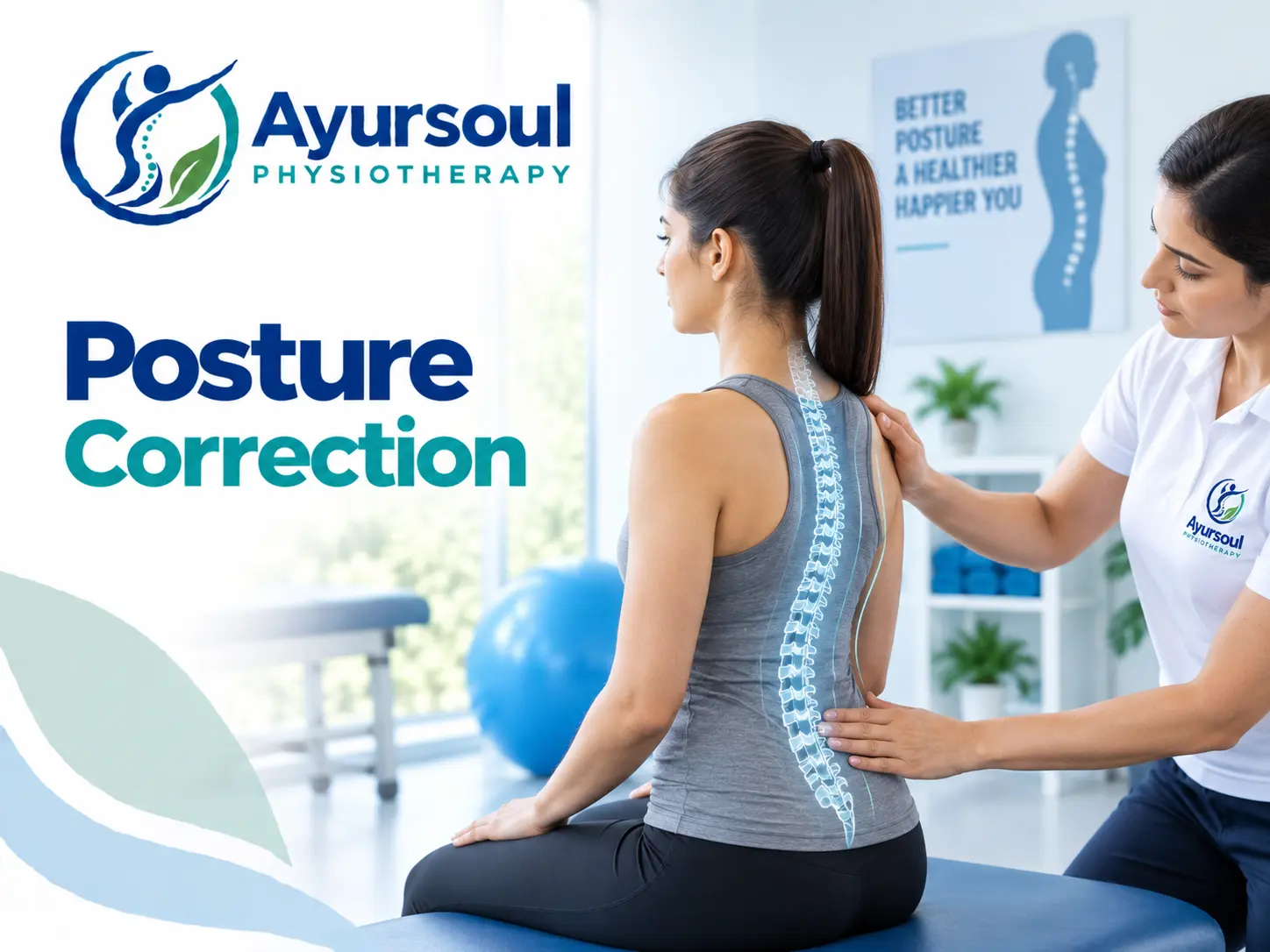
Need Help With Posture Correction?
If postural discomfort has been building up and you'd like a proper assessment, you're welcome to book a physiotherapy appointment with Dr. Ashok K. Anand at Ayursoul Physiotherapy, Spectrum Mall, Sector 75, Noida.
Posture correction physiotherapy focuses on identifying and addressing the muscular imbalances, joint stiffness, and movement habits that contribute to a slouched, forward-leaning, or asymmetrical posture. Many people first notice the issue as a rounded upper back, a head that juts forward over a laptop screen, or shoulders that seem to curl inward by the end of a long workday. Over time, this can bring on stiffness, dull aching pain, and a general sense of fatigue in the neck, shoulders, and lower back.
Poor posture tends to show up most in people who spend long hours sitting — software professionals, students preparing for exams, customer support staff, and anyone whose day involves a desk, a laptop, or a phone held at an awkward angle. It can also develop after an old injury, during pregnancy, or simply as muscles weaken with age and inactivity. If you're based in Noida and this sounds familiar, it's worth knowing that posture-related discomfort is common and, in many cases, can be approached constructively rather than left to worsen.
A physiotherapist may help by first understanding how your posture developed and which muscle groups are tight, weak, or overworked, and then building a plan that can include targeted exercises, manual therapy, and practical ergonomic guidance. At Ayursoul Physiotherapy, located on the 5th Floor of Tower C, Spectrum Mall, Sector 75, Noida, this kind of assessment-led approach is offered under the care of Dr. Ashok K. Anand, depending on what your evaluation shows.

Common Symptoms of Posture Correction
- Rounded shoulders or a visibly slouched upper back
- Forward head posture, sometimes described as "text neck"
- Persistent neck and upper back stiffness, especially after sitting
- Dull, aching pain between the shoulder blades
- Tension headaches that seem to originate at the base of the skull
- Lower back discomfort after standing or sitting for long periods
- Reduced flexibility when turning the neck or reaching overhead
- A general feeling of fatigue or heaviness in the shoulders by evening
Common Causes & Risk Factors
Postural changes rarely happen overnight — they tend to build up gradually from repeated habits and, sometimes, from underlying weakness or old injuries. Prolonged sitting with rounded shoulders, screens positioned too low, and repetitive forward-leaning movements are among the most common contributors seen in a clinical setting.
- Long hours at a desk or laptop with limited movement breaks
- Frequent phone use with the neck bent downward for extended periods
- Weak core, back, and shoulder-blade stabilising muscles
- Tightness in the chest and front-of-shoulder muscles pulling the shoulders forward
- A non-ergonomic workstation, including poorly positioned chairs, monitors, or keyboards
- Reduced physical activity or a largely sedentary daily routine
- Previous injuries, muscle strain, or pain that led to compensatory movement patterns
- Pregnancy-related shifts in weight distribution and spinal curvature
In most cases, posture-related discomfort develops from a combination of these factors rather than a single cause, which is one reason a personalised assessment can be useful before starting a treatment plan.
How Physiotherapy Helps
Physiotherapy for posture-related concerns generally focuses on two things: reducing current discomfort and gradually retraining the muscles and movement patterns that support better alignment. Depending on the assessment findings, this may involve loosening tight muscles through manual therapy, strengthening weaker stabilising muscles around the shoulder blades, spine, and core, and improving overall movement awareness so better posture starts to feel more natural during daily activities.
Because posture habits are often tied to daily routines — how you sit, how your desk is set up, how you hold your phone — physiotherapy can also involve practical education on ergonomics and movement breaks. This combined approach, when followed consistently and tailored after assessment, may help support more comfortable, sustainable posture over time, though the exact pace and extent of improvement can vary from person to person.
What to Expect at Assessment
A physiotherapy assessment for posture-related concerns typically begins with a conversation about your daily routine, work setup, activity levels, and when the discomfort tends to appear or worsen. This is usually followed by an observational assessment of your standing and sitting posture, looking at alignment of the head, shoulders, spine, and pelvis. The physiotherapist may also check the range of motion in your neck, shoulders, and back, along with the strength and flexibility of key muscle groups, to understand which areas are contributing to the postural pattern. Based on these findings, a plan can be discussed that reflects your specific presentation rather than a one-size-fits-all routine.
How Treatment May Be Approached
The exact mix used depends on your assessment — not every technique below applies to every person.
Postural Education
This may include practical guidance on sitting, standing, and workstation setup, along with simple cues to help you notice and correct slouched positions during the day.
Manual Therapy
Hands-on techniques can be used, when clinically appropriate, to help ease tightness in the neck, upper back, and shoulder muscles that often accompany postural strain.
Stretching
A physiotherapist may recommend targeted stretches for tight chest, neck, and hip muscles that commonly pull the body into a forward-leaning posture.
Strengthening
Exercises to build strength in the upper back, shoulder-blade stabilisers, and core muscles can be included to help support a more upright, balanced posture over time.
Therapeutic Exercise
A structured, progressive exercise program may be developed to address the specific muscle imbalances identified during assessment, adjusted as you improve.
Movement Retraining
This can involve practising better movement patterns for everyday tasks — sitting down, reaching, lifting — so improved alignment carries over into daily activities, not just exercise sessions.
Frequently Asked Questions
Can physiotherapy actually fix bad posture?
Physiotherapy can help address many of the muscle imbalances and movement habits that contribute to poor posture, and in many cases people notice improved comfort and alignment with consistent effort. That said, the extent of change depends on the individual, how long the pattern has been present, and how consistently the exercises and habits are followed after assessment.
How many sessions does posture correction usually take?
This varies from person to person and depends on factors like how long the postural pattern has existed and what the assessment reveals. A physiotherapist can give you a more specific idea of what to expect after evaluating your posture, muscle strength, and flexibility.
Is it too late to correct my posture if I've had it for years?
Long-standing postural habits can be harder to change than recent ones, but that doesn't mean improvement isn't possible. Many adults see meaningful gains in comfort and mobility with a consistent, guided approach, even if the posture developed over many years.
Do I need an X-ray or scan before starting posture treatment?
Not usually for straightforward postural discomfort — a clinical assessment is often sufficient to begin with. However, if red-flag symptoms are present or your physiotherapist has specific concerns after assessment, they may suggest further medical evaluation or imaging.
Can sitting at a desk all day really cause this much pain?
Prolonged sitting, especially with rounded shoulders or a forward-leaning head position, is a well-recognised contributor to neck, shoulder, and back discomfort. It's rarely the only factor, but reducing sustained poor postures during desk work can make a noticeable difference alongside targeted exercise.
What can I do at home besides going for physiotherapy sessions?
Simple habits like taking movement breaks every 30-45 minutes, adjusting your screen to eye level, and practising the stretches or exercises given by your physiotherapist can support your progress between sessions. Your physiotherapist can tailor this home guidance based on your specific assessment.
Is posture correction only about exercises, or does it involve anything else?
Exercise is usually a core part of it, but treatment can also include manual therapy for tight muscles, guidance on ergonomics and daily habits, and movement retraining so improved posture translates into everyday activities, not just a set of exercises.
Clinical Evidence & References
The physiotherapy approaches discussed on this page are informed by published clinical research and evidence-based rehabilitation literature. Selected references are provided below for further reading.
-
Khorramroo F, Rostami M, Bafrouei MJ. Corrective exercises strongly improve posture but fail to produce consistent clinical or functional benefits in patients with upper crossed syndrome: a systematic review and meta-analysis of randomized controlled trials. BMC Sports Sci Med Rehabil. 2026;18(1). PMID: 42210327. DOI: 10.1186/s13102-026-01707-8.
Systematic review and meta-analysis Across 28 trials in upper crossed syndrome, corrective exercises produced large improvements in measured head and shoulder alignment, but effects on pain, function and strength were inconclusive.
-
Xing Y, Wang R, Zhao X, Xu A. Therapeutic Exercise for Forward Head Posture in Neck Pain Patients: A Systematic Review and Meta-Analysis. J Pain Res. 2026;19:614524. PMID: 42445930. DOI: 10.2147/JPR.S614524.
Systematic review and meta-analysis In 10 trials of people with forward head posture and neck pain, exercise improved head alignment, pain and neck function, though evidence certainty was low to moderate.
-
Santos W, Rojas C, Isidoro R, Lorente A, Dias A, Mariscal G, et al. Efficacy of Ergonomic Interventions on Work-Related Musculoskeletal Pain: A Systematic Review and Meta-Analysis. J Clin Med. 2025;14(9). PMID: 40364066. DOI: 10.3390/jcm14093034.
Systematic review and meta-analysis Across randomised trials in workers, ergonomic interventions reduced musculoskeletal pain intensity by a very small average amount, with significant effects reported for the neck and back.
-
Aegerter AM, Johnston V, Volken T, Sjøgaard G, Ernst MJ, Luomajoki H, et al. A multi-component intervention (NEXpro) reduces neck pain: a randomized controlled trial among Swiss office workers. Scand J Work Environ Health. 2026;52(1):51-62. PMID: 41037652. DOI: 10.5271/sjweh.4254.
Randomized controlled trial In office workers without severe neck problems, a 12-week exercise, health-promotion and ergonomics programme slightly reduced how often neck pain occurred and related disability.