
Post-Surgery Physiotherapy in Noida
Recovering from surgery? Ayursoul Physiotherapy in Sector 75, Noida offers post-surgery physiotherapy to help rebuild strength, mobility and confidence.
Visit Ayursoul Physiotherapy Clinic
Ayursoul Healthcare, Spectrum Mall, Sector 75, Noida, Uttar Pradesh
Open daily: 10:00 AM – 8:00 PM
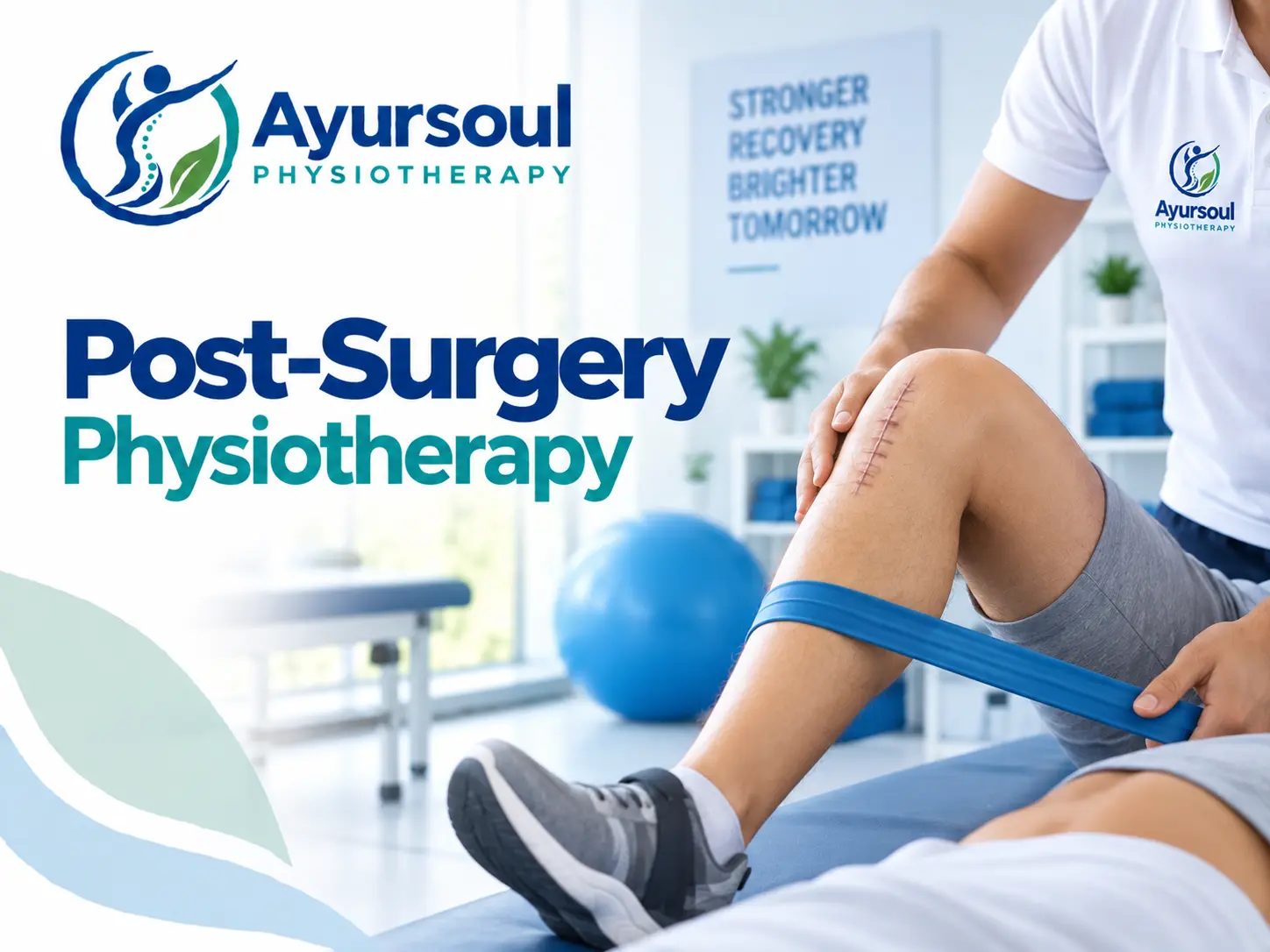
Need Help With Post-Surgery Physiotherapy?
If you're recovering from surgery and looking for guided, one-on-one physiotherapy support to help rebuild strength and movement safely, Ayursoul Physiotherapy in Sector 75, Noida is ready to help you plan your next step.
Post-surgery physiotherapy refers to the structured rehabilitation that may follow a surgical procedure, aimed at helping the body regain movement, strength, and function during recovery. It is commonly considered after orthopedic procedures such as joint replacement, ligament reconstruction, or fracture surgery, as well as spinal, shoulder, or certain general surgeries where movement has been restricted during the healing phase.
People recovering from surgery often notice stiffness in the operated area, weakness in the surrounding muscles, some swelling, and hesitation about moving normally again — this can be a typical part of the healing timeline rather than a sign that something has gone wrong. At Ayursoul Physiotherapy in Sector 75, Noida, patients at different stages of post-surgical recovery are seen after assessment, with an approach that depends on the type of surgery, the operating surgeon's guidance, and each person's individual healing progress.
Depending on the surgery and the stage of recovery, physiotherapy may help support a gradual return of movement and strength, though outcomes and timelines can vary from person to person and no specific result can be promised in advance. Every recovery plan is discussed individually with the physiotherapist, rather than assumed to be the same for everyone.
Common Symptoms of Post-Surgery Physiotherapy
- Stiffness or reduced range of motion in the operated joint or area
- Weakness in the muscles surrounding the surgical site
- Swelling or mild fluid buildup near the incision during early recovery
- Pain or discomfort during movement, walking, or weight-bearing
- Difficulty climbing stairs, standing for long periods, or walking normally
- Reduced balance or confidence when moving the operated area
- Tightness around the scar affecting nearby flexibility
- General fatigue with everyday activities during the recovery period
Common Causes & Risk Factors
Physiotherapy is often recommended after several types of surgery, since surgical healing frequently comes with a period of stiffness, weakness, and reduced confidence in movement. Whether structured rehabilitation is needed, and how soon, can depend on the type of procedure performed and how the body responds during the initial healing phase.
- Orthopedic procedures such as knee or hip replacement, ACL or other ligament reconstruction, or fracture fixation
- Spinal surgery, including discectomy or spinal fusion
- Shoulder or rotator cuff repair
- Abdominal, gynecological, or other general surgeries that limit movement during recovery
- Extended periods of immobilization, bed rest, or bracing following surgery
How quickly someone regains strength and movement after surgery can vary depending on factors like age, fitness levels before surgery, the complexity of the procedure, and how closely post-operative advice from the surgeon is followed. A physiotherapist typically works alongside these factors rather than in place of surgical or medical guidance.
How Physiotherapy Helps
After surgery, a physiotherapist may work with a patient to gradually restore joint movement, reduce stiffness, and manage swelling around the surgical site, always working within the precautions and timelines set by the operating surgeon. Depending on the stage of recovery, this can involve gentle guided movement in the early days, progressing to more structured strengthening and functional exercises as healing allows and when clinically appropriate.
In many cases, physiotherapy after surgery also focuses on rebuilding the confidence and control needed for everyday activities such as walking, climbing stairs, or returning to work, and may support a smoother, better-paced recovery for some patients. It is not a substitute for surgical follow-up or medical care, and any physiotherapy plan is typically shaped around an individual's healing progress after assessment rather than a fixed formula applied to everyone.
What to Expect at Assessment
Before beginning any post-surgical rehabilitation plan, a physiotherapist would typically start by reviewing the type of surgery performed, the surgeon's post-operative instructions, and any movement precautions or restrictions that apply. This is usually followed by a functional assessment that may look at range of motion, muscle strength, swelling, general wound healing status, walking pattern, balance, and how comfortably the patient can manage everyday movements. Based on these findings and the current stage of healing, a physiotherapist can then discuss a suitable, individualized approach after assessment rather than applying the same plan to every patient.
How Treatment May Be Approached
The exact mix used depends on your assessment — not every technique below applies to every person.
Mobility Exercises
Gentle, guided range-of-motion movements may be introduced early in recovery, depending on the surgeon's clearance and the type of procedure performed.
Manual Therapy
Hands-on techniques may be used to help address stiffness, swelling, or scar tissue tightness once the surgical site has healed sufficiently.
Therapeutic Exercise
A progressive exercise program can be designed to match each stage of healing, gradually increasing in demand as tolerated after assessment.
Strengthening
Targeted strengthening for muscles around the surgical site may be introduced once appropriate, to help support the joint or area during daily movement.
Balance Training
For surgeries affecting the hip, knee, or lower limb, balance and stability exercises can help rebuild confidence in standing and walking.
Functional Rehabilitation
Practice with everyday tasks such as walking, using stairs, or getting up from a chair may be included to support a gradual return to normal routines.
Electrotherapy
Modalities such as ultrasound or electrotherapy may be used as an adjunct in some cases to help manage pain or swelling, depending on individual assessment.
Frequently Asked Questions
How soon after surgery can I start physiotherapy?
This depends on the type of surgery and your surgeon's advice, and can range from a few days to several weeks after the procedure. A physiotherapist would typically confirm your surgeon's clearance and any movement precautions before starting a plan.
Do I need a referral from my surgeon before visiting a physiotherapist?
It's a good idea to check with your surgeon first, especially in the early weeks after surgery, since they may have specific precautions for your procedure. Sharing your discharge summary or surgeon's notes with your physiotherapist can help them plan appropriately.
Will physiotherapy hurt after surgery?
Some mild discomfort during movement or stretching can be normal as tissues heal, but physiotherapy is generally planned to stay within a tolerable range depending on your recovery stage. Any exercise that causes sharp or worsening pain should be reported to your physiotherapist.
How long does post-surgery physiotherapy usually take?
The duration varies widely depending on the type of surgery, your general health, and how your body responds to treatment, so it is difficult to give a fixed timeline. A physiotherapist can offer a more specific idea of what to expect after an initial assessment.
Can physiotherapy help with tightness around my scar?
Gentle scar and soft-tissue mobility techniques may be included once the wound has healed sufficiently, and can sometimes help with tightness affecting nearby movement. This is generally introduced only after checking the incision is fully closed and suitable for hands-on work.
I still have swelling several weeks after surgery — is that normal?
Mild swelling can persist for some time after certain surgeries, particularly those involving joints, but it is worth having it assessed rather than assuming it will resolve on its own. A physiotherapist or your surgeon can help determine whether it fits your expected recovery pattern.
Is physiotherapy necessary after every surgery?
Not every surgery requires formal physiotherapy, and the need can depend on the type of procedure, your surgeon's recommendation, and how your recovery is progressing. This is best discussed with your surgeon and, if referred, assessed individually by a physiotherapist.
Can physiotherapy replace the need for further medical follow-up?
No, physiotherapy is meant to support recovery alongside your surgeon's care, not replace medical follow-up appointments or advice. Any concerns about the surgical site or your overall recovery should still be directed to your surgeon.
Clinical Evidence & References
The physiotherapy approaches discussed on this page are informed by published clinical research and evidence-based rehabilitation literature. Selected references are provided below for further reading.
-
Bove AM, Carroll LA, Cone S, Dibblee P, Hensley CP, Lenington K, et al. Clinical practice guideline for physical therapist management of total knee arthroplasty: revision 2026. Phys Ther. 2026;106(7). PMID: 42506877. DOI: 10.1093/ptj/pzag058.
Clinical practice guideline A US physical therapy guideline, based on a systematic review, makes 20 recommendations for physical therapist care after knee replacement and highlights remaining evidence gaps.
-
van Melick N, van Cingel RE, Brooijmans F, Neeter C, van Tienen T, Hullegie W, et al. Evidence-based clinical practice update: practice guidelines for anterior cruciate ligament rehabilitation based on a systematic review and multidisciplinary consensus. Br J Sports Med. 2016;50(24):1506-1515. PMID: 27539507. DOI: 10.1136/bjsports-2015-095898.
Clinical practice guideline A Dutch guideline based on a systematic review and expert consensus recommends 9-12 months of staged rehabilitation after ACL reconstruction, progressing on strength, hop and movement tests.
-
Wainwright TW, Gill M, McDonald DA, Middleton RG, Reed M, Sahota O, et al. Consensus statement for perioperative care in total hip replacement and total knee replacement surgery: Enhanced Recovery After Surgery (ERAS(®)) Society recommendations. Acta Orthop. 2020;91(1):3-19. PMID: 31663402. DOI: 10.1080/17453674.2019.1683790.
Consensus statement ERAS Society consensus recommends patient education, multimodal pain relief and early mobilisation after hip and knee replacement, while noting the protocol needs further evaluation.
-
Menéndez-Vega F, Núñez-Rodríguez S, González-Bernal JJ, Fernández-Solana J, Aparicio de Águeda P, Santamaría-Peláez M. Timing Matters: Early Versus Delayed Rehabilitation After Total Knee Arthroplasty and Its Impact on Functional Recovery-A Systematic Review. J Funct Morphol Kinesiol. 2026;11(2). PMID: 42346762. DOI: 10.3390/jfmk11020233.
Systematic review A small review (5 studies, 185 patients) found starting rehab within days of knee replacement appeared safe and shortened hospital stay, but long-term function was similar.