
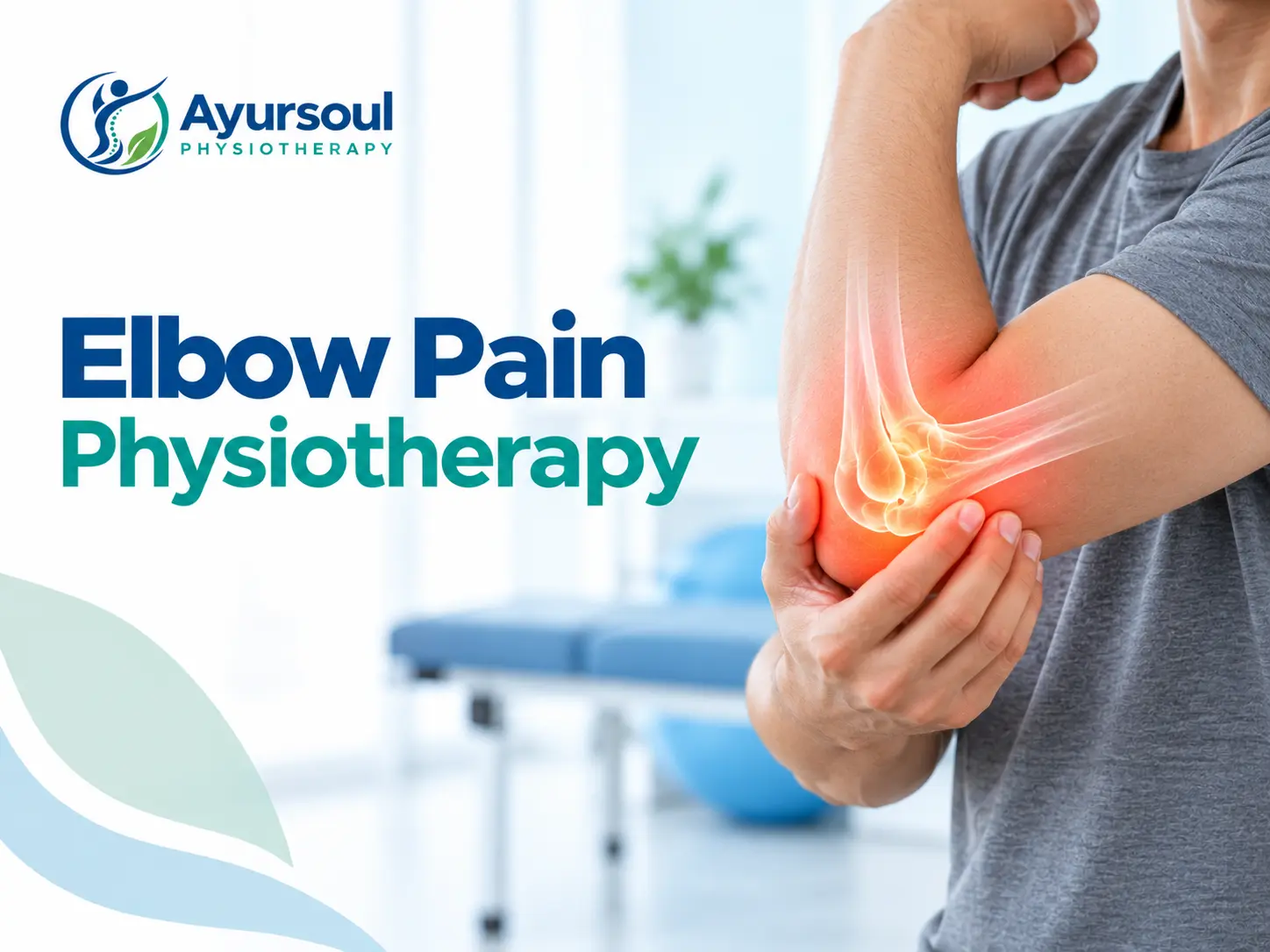
Elbow Pain Physiotherapy in Noida
Persistent elbow pain? Ayursoul Physiotherapy in Noida offers assessment-led care for golfer's elbow, bursitis, arthritis and more under Dr. Ashok K. Anand.
Visit Ayursoul Physiotherapy Clinic
Ayursoul Healthcare, Spectrum Mall, Sector 75, Noida, Uttar Pradesh
Open daily: 10:00 AM – 8:00 PM
Need Help With Elbow Pain Physiotherapy?
If you're dealing with ongoing elbow pain, book an assessment with Dr. Ashok K. Anand at Ayursoul Physiotherapy, Spectrum Mall, Sector 75, Noida, or call +91 88003 68078 to discuss your symptoms.
Elbow pain is a broad complaint that can arise from several different structures around the joint — the tendons on the inner or outer elbow, the small bursa sac at its tip, the joint surfaces themselves, or even nerves travelling down from the neck and shoulder. Because the elbow is used constantly for lifting, gripping, typing and turning the forearm, ongoing discomfort here can quietly interfere with work, sport, driving and everyday household tasks.
This page looks at elbow pain in general — including inner-elbow tendon pain (often called golfer's elbow or medial epicondylitis), olecranon bursitis (swelling at the tip of the elbow), elbow arthritis, and pain that is actually referred from the neck or shoulder rather than the elbow itself. If your pain sits mainly on the outer side of the elbow and worsens with gripping or lifting a cup, it may be more typical of tennis elbow (lateral epicondylitis) — a related but distinct condition covered in detail on our dedicated Tennis Elbow Physiotherapy page.
A physiotherapy assessment may help identify which structures appear to be contributing to your symptoms and outline a plan that is appropriate for your presentation. This page is for general information and does not replace an individual clinical assessment.

Common Symptoms of Elbow Pain Physiotherapy
- Ache or sharp pain on the inner, outer, or back of the elbow
- Pain that worsens with gripping, twisting, or lifting objects
- Tenderness when pressing on a bony point of the elbow
- Swelling or a soft, fluid-filled lump at the tip of the elbow
- Stiffness or reduced ability to fully bend or straighten the arm
- Weak grip strength or a feeling that objects may slip from the hand
- Pain that radiates into the forearm or, less commonly, up toward the shoulder
- A catching, locking, or grinding sensation with elbow movement
Common Causes & Risk Factors
Elbow pain rarely has a single universal cause — it depends on which structure around the joint is affected. Some common contributors seen in physiotherapy practice include:
- Repetitive gripping, wrist-flexing, or throwing motions (common in golf, racquet sports, manual trades, and repetitive computer or tool use)
- Direct pressure or repeated leaning on the elbow, which can irritate the bursa at its tip
- Age-related wear at the elbow joint, sometimes associated with osteoarthritis
- A previous fall, direct knock, or minor trauma to the elbow
- Sudden increases in activity, sport, or manual work without adequate conditioning
- Poor lifting or gripping technique, or awkward wrist and forearm positioning during repetitive tasks
- Referred pain originating from the neck, upper back, or shoulder rather than the elbow itself
- Underlying inflammatory or rheumatological conditions affecting the joint, when present
Causes and contributing factors vary from person to person, and a physiotherapy assessment may help clarify which of these are relevant in your case.
How Physiotherapy Helps
Physiotherapy for elbow pain generally starts with identifying which structures seem to be involved and how the elbow is being loaded during daily activities. Depending on the assessment findings, care may include manual therapy to the elbow, forearm, and surrounding soft tissue, along with graded exercises aimed at tendon loading, grip strength, and forearm flexibility. Where clinically appropriate, modalities such as ultrasound therapy, laser therapy, or electrotherapy may be used alongside hands-on treatment to help manage pain and support the tissue's response to loading.
For elbow pain linked to repetitive strain or bursitis-type irritation, techniques such as myofascial release, trigger point therapy, and dry needling may be considered as part of a broader plan, alongside activity or ergonomic advice for work and sporting tasks. Cupping therapy and medical acupuncture may also be discussed as adjuncts for some presentations. Kinesio taping may be used short-term to support the area during a return to activity. Because elbow pain can sometimes be referred from the neck or shoulder, a physiotherapist may also assess these regions rather than focusing on the elbow in isolation. Any plan is tailored after assessment, and responses to treatment vary between individuals.
What to Expect at Assessment
A physiotherapy assessment for elbow pain typically begins with a discussion of when the pain started, what activities aggravate or ease it, and any relevant medical history, sport, or occupational demands. The physiotherapist will usually observe elbow, wrist, and forearm movement, test grip and forearm muscle strength, and gently palpate around the elbow to identify areas of tenderness, swelling, or thickened tissue. Specific tests may be used to help differentiate between inner-elbow tendon irritation, bursitis, joint-related stiffness, and pain referred from the neck or shoulder. Where symptoms suggest a possible fracture, significant swelling, nerve involvement, or an inflammatory joint condition, referral for further medical review or imaging may be recommended before or alongside physiotherapy.
How Treatment May Be Approached
The exact mix used depends on your assessment — not every technique below applies to every person.
Manual Therapy
Hands-on techniques to the elbow, forearm, and surrounding soft tissue may be used to help address stiffness and localised tenderness when clinically appropriate.
Graded Tendon-Loading Exercises
Progressive strengthening exercises for the forearm flexor and extensor muscles may be introduced to support tendon tolerance to load over time.
Dry Needling & Trigger Point Therapy
May be used to address tight or sensitive muscle bands in the forearm that can contribute to elbow discomfort, when appropriate for the individual.
Electrotherapy, Ultrasound & Laser Therapy
These modalities may be used alongside other treatment as part of a broader plan to help manage localised pain and support tissue recovery.
Myofascial Release & Cupping Therapy
May be considered for soft-tissue tightness around the elbow and forearm in select cases, as an adjunct to active treatment.
Activity Modification & Ergonomic Assessment
Advice on grip technique, tool use, workstation setup, or sporting technique may be provided to help reduce ongoing strain on the elbow.
Frequently Asked Questions
Is this the same as tennis elbow?
Not necessarily. This page covers elbow pain broadly, including inner-elbow conditions like golfer's elbow, bursitis, and arthritis. Tennis elbow refers specifically to outer-elbow tendon pain, which is covered on our separate Tennis Elbow Physiotherapy page.
What is golfer's elbow and how is it different from tennis elbow?
Golfer's elbow (medial epicondylitis) typically involves pain on the inner side of the elbow where the forearm flexor tendons attach, while tennis elbow affects the outer side. Both involve overuse of forearm tendons but respond to somewhat different loading strategies.
Why is there a swollen lump at the tip of my elbow?
A soft swelling at the bony point of the elbow may be related to olecranon bursitis, often from repeated pressure or leaning on the elbow. A physiotherapist or doctor can help assess whether this needs medical review, especially if it is red, hot, or painful.
Can neck problems cause elbow pain?
Yes, pain can sometimes be referred from the neck or upper back down into the arm and elbow. A thorough assessment may include screening the neck and shoulder if elbow-specific findings do not fully explain the symptoms.
Will I need an X-ray or scan for my elbow pain?
Not always. Imaging is usually reserved for cases involving trauma, suspected fracture, marked swelling, or when symptoms do not respond as expected to initial care. Your physiotherapist can advise if referral seems appropriate.
How long does elbow pain typically take to improve with physiotherapy?
This varies widely depending on the underlying cause, how long symptoms have been present, and individual factors. Some people notice gradual improvement over several weeks of consistent exercise and load management, while others may take longer.
Can I continue exercising or working with elbow pain?
This depends on the specific diagnosis and severity. A physiotherapist can usually suggest activity modifications or technique adjustments so you can stay as active as possible while the elbow settles.
Is elbow arthritis treated differently from tendon-related elbow pain?
The general principles of assessment and graded loading are similar, but arthritis-related stiffness may involve more emphasis on joint mobility work, while tendon conditions often focus more on progressive tendon loading.
Clinical Evidence & References
The physiotherapy approaches discussed on this page are informed by published clinical research and evidence-based rehabilitation literature. Selected references are provided below for further reading.
-
See ZH, Loo CE, Jaafar Z. Eccentric exercise therapy for medial epicondylitis: A systematic review of clinical outcomes. Complement Ther Med. 2026;98:103364. PMID: 41887339. DOI: 10.1016/j.ctim.2026.103364.
Systematic review Five small studies suggest eccentric exercise may ease pain and improve function in golfer's elbow, but certainty is low and only one trial beat a comparison treatment.
-
Kaur IP, Mughal MS, Aslam F, Schram J, Bansal P. Non-surgical treatment of aseptic olecranon bursitis: A systematic review. Reumatol Clin (Engl Ed). 2023;19(9):482-487. PMID: 37945181. DOI: 10.1016/j.reumae.2023.05.004.
Systematic review Limited, high risk-of-bias evidence suggests non-infected elbow bursitis can settle with early conservative care; steroid injections shortened symptoms but caused more complications, including infection.
-
Amin NH, Kumar NS, Schickendantz MS. Medial epicondylitis: evaluation and management. J Am Acad Orthop Surg. 2015;23(6):348-55. PMID: 26001427. DOI: 10.5435/JAAOS-D-14-00145.
Narrative review An orthopaedic review describes golfer's elbow management as activity modification and symptom relief first, followed by forearm flexor rehabilitation, with surgery reserved for persistent cases.