
Plantar Fasciitis Physiotherapy in Noida
Struggling with sharp heel pain first thing in the morning? Our physiotherapy team in Noida offers assessment-led care for plantar fasciitis. Book today.
Visit Ayursoul Physiotherapy Clinic
Ayursoul Healthcare, Spectrum Mall, Sector 75, Noida, Uttar Pradesh
Open daily: 10:00 AM – 8:00 PM
Need Help With Plantar Fasciitis Physiotherapy?
If morning heel pain is affecting your daily routine, book a physiotherapy assessment with Dr. Ashok K. Anand at AyurSoul Physiotherapy, Spectrum Mall, Sector 75, Noida, or call +91 88003 68078 to schedule a visit.
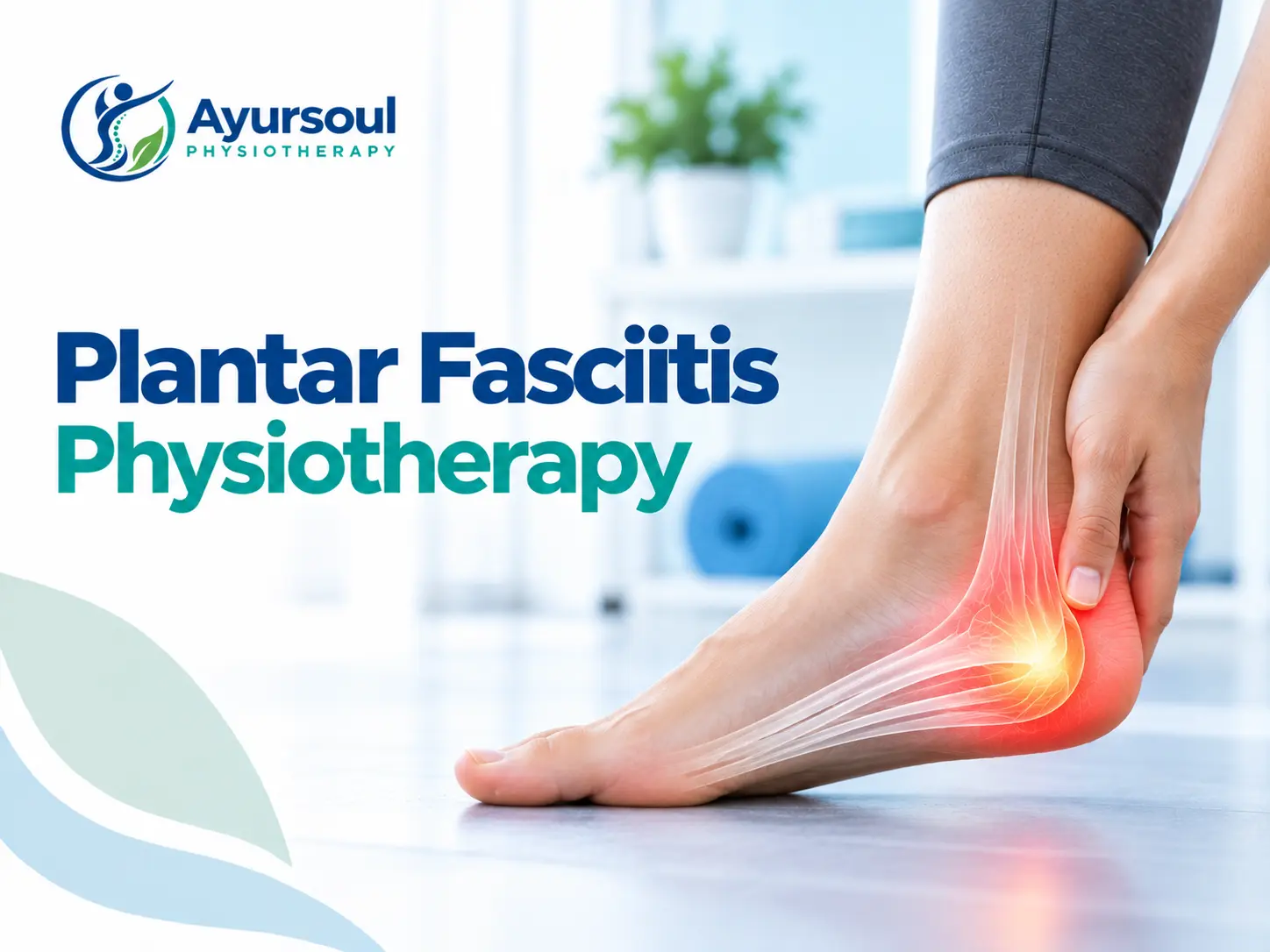
Plantar fasciitis is generally considered the most common cause of heel and sole pain, resulting from irritation of the thick band of tissue (the plantar fascia) that runs along the bottom of the foot from the heel to the toes. It tends to show up as a sharp, stabbing sensation under the heel that is often at its worst with the very first steps in the morning or after sitting for a while.
It can affect almost anyone, but it is seen more often in people who spend long hours on their feet, runners and walkers who have recently increased their activity, people carrying extra body weight, and those wearing footwear with little arch or heel support. Tightness in the calf muscles and Achilles tendon may also play a role for some individuals.
Physiotherapy is often suggested as a first-line, non-surgical approach for plantar fasciitis. A physiotherapist may assess your foot posture, gait, calf flexibility and daily footwear habits, then suggest a plan aimed at easing pain and gradually restoring comfortable walking and standing. If your heel or foot pain does not seem to fit this pattern, it may help to read our page on foot pain physiotherapy, which covers the wider range of conditions that can cause pain in the foot.
Common Symptoms of Plantar Fasciitis Physiotherapy
- Sharp, stabbing pain under the heel with the very first steps in the morning
- Heel pain that eases somewhat after a few minutes of walking, then returns later in the day
- Increased discomfort after standing for long periods or at the end of a long day
- Tenderness when pressing on the bottom of the heel, close to the arch
- Pain that flares up after running, walking on hard surfaces, or increased activity
- Mild swelling or a feeling of warmth around the heel area
- Noticeable tightness in the arch of the foot or the calf muscles
- Discomfort walking barefoot on hard floors or climbing stairs
Common Causes & Risk Factors
Plantar fasciitis is usually described as an overuse or repetitive-strain type condition, though the exact combination of factors can differ from person to person. Some of the commonly recognised contributors include:
- A sudden increase in walking, running or standing activity without adequate build-up
- Tightness in the calf muscles or Achilles tendon limiting ankle flexibility
- Flat feet, a very high arch, or an abnormal walking pattern that alters load through the fascia
- Footwear with poor arch support or worn-out soles, including prolonged use of flat sandals
- Extended periods of standing on hard surfaces, common in certain occupations
- Being above a healthy body weight, which may increase strain on the plantar fascia
- Age-related changes, as plantar fasciitis is seen more frequently in the 40 to 60 age group
- Bone spurs at the heel in some individuals, though these are not always the cause of pain
These are general risk factors, and the exact cause of heel pain can vary from one individual to another, which is why an in-person assessment is useful before starting any treatment.
How Physiotherapy Helps
Physiotherapy for plantar fasciitis generally focuses on reducing irritation of the plantar fascia, improving calf and ankle flexibility, and gradually building tolerance to standing and walking. Manual Therapy may be used to address stiffness in the ankle joint and tightness in the surrounding soft tissue, while Myofascial Release and Trigger Point Therapy may help ease tension in the calf muscles that can contribute to pulling on the fascia.
Depending on presentation, a physiotherapist may also consider Ultrasound Therapy, Laser Therapy or Electrotherapy to support pain management in the early stages, and Dry Needling where tight, tender points are identified in the calf. Kinesio Taping may occasionally be used for short-term symptomatic support, and an Ergonomic Assessment can help identify footwear, workstation or activity habits that may be adding strain to the foot. These approaches are typically combined with a structured exercise programme rather than used in isolation, and outcomes can vary between individuals.
What to Expect at Assessment
A physiotherapy assessment for suspected plantar fasciitis typically begins with a discussion of when the pain started, its pattern through the day, footwear habits, activity levels and any recent changes in exercise or occupation. This is usually followed by a physical examination that may include palpation of the heel and arch to locate tender areas, checking calf and ankle flexibility, observing your standing posture and walking pattern, and assessing foot arch type. The physiotherapist may also ask about your typical daily activities and footwear to understand possible contributing factors, and this information is generally used to guide a personalised plan of care.
How Treatment May Be Approached
The exact mix used depends on your assessment — not every technique below applies to every person.
Manual Therapy
Hands-on techniques may be used to address ankle joint stiffness and tightness in the tissue around the heel and arch, when clinically appropriate.
Myofascial Release & Trigger Point Therapy
These techniques may be used to ease tension in the calf muscles and plantar fascia that can contribute to ongoing heel pain.
Calf & Foot Stretching Programme
A guided stretching routine for the calf, Achilles tendon and plantar fascia may be suggested to gradually improve flexibility.
Foot & Ankle Strengthening Exercises
Targeted exercises for the small muscles of the foot and ankle may be introduced to support the arch and reduce repetitive strain.
Electrotherapy, Ultrasound & Laser Therapy
These modalities may be used in select cases to help manage localised pain and support the healing process.
Kinesio Taping & Ergonomic Advice
Taping and guidance on supportive footwear or activity modification may be offered where relevant to reduce ongoing strain on the fascia.
Frequently Asked Questions
How long does plantar fasciitis usually take to settle with physiotherapy?
Recovery timelines vary widely between individuals depending on severity, activity levels and how consistently exercises are followed. A physiotherapist can give you a more personalised idea after an assessment, but noticeable improvement is often gradual rather than immediate.
Is plantar fasciitis the same as a heel spur?
They are related but not identical. A heel spur is a bony growth that some people with plantar fasciitis also have, but many people with heel spurs have no pain at all, and many people with plantar fasciitis have no visible spur. The pain is generally attributed to the irritated fascia tissue rather than the spur itself.
Can I keep walking or exercising if I have plantar fasciitis?
This depends on the severity of your symptoms, and a physiotherapist can help you decide which activities to modify or reduce temporarily. Completely stopping all activity is not always necessary, but pushing through sharp pain is usually discouraged.
Do I need an X-ray or scan before starting physiotherapy?
Not always. Plantar fasciitis is often identified through symptoms and physical examination alone. Your physiotherapist or doctor may suggest imaging in certain cases, such as when symptoms are unusual or not improving as expected.
What kind of footwear is recommended for plantar fasciitis?
Supportive, cushioned footwear with good arch support is generally suggested, and flat, unsupportive footwear is usually best avoided during a flare-up. A physiotherapist can offer more specific guidance based on your foot type during an ergonomic assessment.
Can plantar fasciitis come back after it improves?
It is possible for symptoms to recur, particularly if contributing factors like calf tightness, sudden activity increases or unsupportive footwear are not addressed. Continuing a home exercise routine may help reduce this risk, though outcomes vary.
Is heel pain always plantar fasciitis?
Not necessarily. Heel and foot pain can have several other causes, so if your symptoms don't match the typical pattern of plantar fasciitis, it may be worth reading about the broader range of causes on our foot pain physiotherapy page or discussing this with your physiotherapist.
Will I need surgery for plantar fasciitis?
The majority of cases are managed with conservative approaches such as physiotherapy, activity modification and supportive footwear. Surgery is generally considered only in persistent cases that have not responded to other treatment, and that decision would be made by a treating doctor.
Clinical Evidence & References
The physiotherapy approaches discussed on this page are informed by published clinical research and evidence-based rehabilitation literature. Selected references are provided below for further reading.
-
Koc TA Jr, Bise CG, Neville C, Carreira D, Martin RL, McDonough CM. Heel Pain - Plantar Fasciitis: Revision 2023. J Orthop Sports Phys Ther. 2023;53(12):CPG1-CPG39. PMID: 38037331. DOI: 10.2519/jospt.2023.0303.
Clinical practice guideline The APTA's evidence-based clinical practice guideline (2023 revision) sets out recommendations for physical therapy management of non-arthritic heel pain, including plantar fasciitis.
-
Li Z, He S, Wu J, Zhu Z, Chen L, Lu W. Efficacy of physical therapy interventions delivered with home exercise programs for pain and function in plantar fasciitis: a systematic review and network meta-analysis of randomized controlled trials. Phys Ther. 2026;106(6). PMID: 42176209. DOI: 10.1093/ptj/pzag056.
Systematic review and meta-analysis In 24 trials, adding dry needling, laser or manual therapy to home exercise improved short-term plantar fasciitis pain versus exercise alone (moderate certainty); dry needling's benefit persisted at 6-12 weeks.
-
Yang A, Lin R, Xia M, Su H, He Y. The effectiveness of dry needling for plantar fasciitis: a systematic review and meta-analysis. Front Neurol. 2024;15:1520585. PMID: 39744103. DOI: 10.3389/fneur.2024.1520585.
Systematic review and meta-analysis In 12 trials, adding dry needling to routine care reduced plantar fasciitis pain and improved function, but it was not clearly better than other active treatments for pain.
-
Li X, Yang J, Li S, Yang L, Meng D. The efficacy of ultrasound for plantar fasciitis, a systematic review and meta-analysis. Ann Med. 2025;57(1):2543056. PMID: 40785236. DOI: 10.1080/07853890.2025.2543056.
Systematic review and meta-analysis Across 13 trials, ultrasound did not reduce plantar fasciitis pain whether used alone or added to exercise, though adding it to exercise may improve foot function.
-
Jawade SS, Jawade SA. Therapeutic efficacy of stretching exercises as a conservative treatment for plantar fasciitis: a systematic review with meta-analysis. J Man Manip Ther. 2026:1-15. PMID: 42732047. DOI: 10.1080/10669817.2026.2733480.
Systematic review and meta-analysis Across 12 trials, calf, Achilles and plantar-fascia stretching was not clearly better than other conservative treatments for pain or function, and evidence certainty was very low.
-
Jawade SS, Jawade SA, Bankar N, Vardhan V. Effectiveness of soft tissue manual therapy in managing chronic plantar fasciitis: a systematic review. J Man Manip Ther. 2026:1-8. PMID: 41906854. DOI: 10.1080/10669817.2026.2650500.
Systematic review Across 11 trials in chronic plantar fasciitis, adding soft-tissue manual therapy to conventional therapy was linked to better pain and function, though results were too varied to pool.
-
Kocahan T, Örsçelik A, Günaydın H, Büyüklüoğlu G, Karaaslan B, Asar E, et al. Can kinesio tape negatively affect the treatment by creating a hard floor in plantar fasciitis treatment? A randomized clinical trial. PLoS One. 2025;20(5):e0322397. PMID: 40323967. DOI: 10.1371/journal.pone.0322397.
Randomized controlled trial In a small trial of 42 patients, adding kinesio tape to shockwave therapy gave no extra pain relief and less improvement in activity limitation than shockwave alone.