
Manual Therapy in Noida
Joint stiffness or muscle tightness? Ayursoul Physiotherapy, Sector 75, Noida offers hands-on manual therapy that may ease stiffness and support movement.
Visit Ayursoul Physiotherapy Clinic
Ayursoul Healthcare, Spectrum Mall, Sector 75, Noida, Uttar Pradesh
Open daily: 10:00 AM – 8:00 PM
Need Help With Manual Therapy?
If stiffness, tightness, or restricted movement is affecting your daily routine, you're welcome to book an assessment with Dr. Ashok K. Anand at Ayursoul Physiotherapy in Sector 75, Noida to discuss whether manual therapy is a suitable option for you.
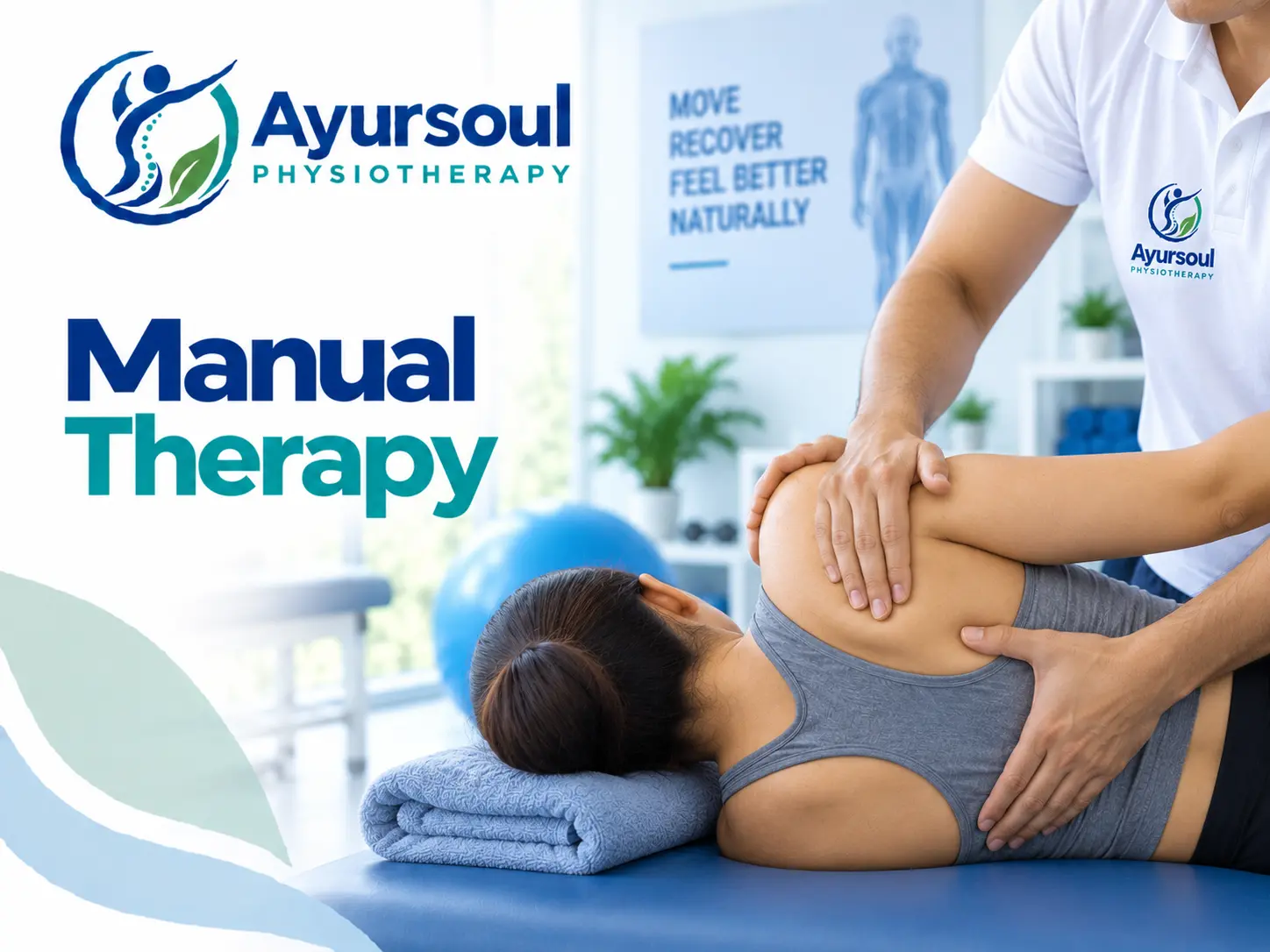
Manual therapy is a hands-on approach physiotherapists use to assess and treat pain, stiffness, and restricted movement in joints, muscles, and soft tissue. Instead of relying on machines alone, a physiotherapist applies controlled techniques such as joint mobilization, soft tissue release, and gentle manipulation, guided by what is found during a physical assessment. At Ayursoul Physiotherapy in Sector 75, Noida, manual therapy is offered as one part of a broader, individually planned physiotherapy program rather than as a stand-alone quick fix.
People typically look into manual therapy when dealing with stiff or restricted joints, muscle tightness that does not ease with rest or basic stretching, pain that limits how far a joint can move comfortably, or ongoing stiffness following an injury, surgery, or a long period of inactivity. It is commonly considered for neck and back stiffness, shoulder restriction, and joint discomfort that has built up gradually or followed a specific strain.
Depending on what the assessment finds, manual therapy may help improve joint mobility, reduce muscle tension, and support a more comfortable range of movement, often alongside targeted exercise. Responses vary from person to person, and a physiotherapist will usually explain what manual therapy can reasonably be expected to contribute to your specific situation before treatment begins.

Common Symptoms of Manual Therapy
- Stiffness in a joint that limits everyday movement, such as turning the neck or reaching overhead
- Muscle tightness or knots that do not ease with rest or stretching alone
- Pain that feels worse with certain movements or after staying in one position too long
- Reduced range of motion in the neck, shoulder, back, or hip
- A feeling of a joint being "stuck" or restricted, especially after an injury or period of immobility
- Tension-type headaches linked to neck and upper back stiffness
- Muscle guarding or spasm following a strain or overuse
- Gradual loss of flexibility associated with long hours of desk work or sedentary habits
Common Causes & Risk Factors
Restricted movement and soft tissue tightness that lead people to consider manual therapy can develop for several reasons. In many cases it follows a specific injury or strain, though in others it builds up gradually from everyday habits or underlying joint changes.
- Prolonged sitting or poor posture, especially with long desk or screen-based work
- Muscle strain or ligament sprain from sport, exercise, or an awkward movement
- Stiffness following a period of immobilization, such as after a minor injury
- Repetitive movements or overuse during daily or occupational tasks
- Age-related joint stiffness or degenerative changes
- Stress-related muscle tension, particularly around the neck and shoulders
Because the underlying cause can vary widely, a physiotherapist will typically assess the specific joints and tissues involved before deciding whether manual therapy is an appropriate part of the treatment plan.
How Physiotherapy Helps
When manual therapy is considered appropriate after assessment, a physiotherapist may use techniques such as joint mobilization, soft tissue massage, myofascial release, or gentle manipulation to address stiffness and restricted movement. These techniques are generally intended to support pain relief, encourage local circulation, and help restore a more comfortable range of motion, which in many cases can make subsequent exercise easier to perform.
Manual therapy is rarely used in isolation. It is typically combined with therapeutic exercise, posture guidance, and movement retraining, so that improvements in mobility gained through hands-on treatment can be reinforced through active movement. The specific combination of techniques depends on the joint or tissue involved, the findings of the assessment, and how the individual responds over the course of treatment.
What to Expect at Assessment
Before recommending manual therapy, a physiotherapist will usually begin with a detailed history, asking about when the stiffness or discomfort started, what makes it better or worse, any past injuries, and whether any red-flag symptoms are present that would need separate medical evaluation. This is followed by a physical assessment of posture, joint range of motion, muscle tightness, and movement patterns, which helps identify which structures are contributing to the restriction. Based on these findings, the physiotherapist decides whether manual therapy is appropriate, which techniques may be suitable, and how it should be combined with other approaches such as exercise or posture correction.
How Treatment May Be Approached
The exact mix used depends on your assessment — not every technique below applies to every person.
Manual Therapy
May include joint mobilization, soft tissue release, and gentle manipulation aimed at reducing stiffness and improving comfortable movement, applied according to assessment findings.
Mobility Exercises
Guided movements may be used to help maintain and build on the range of motion gained during hands-on treatment sessions.
Stretching
Targeted stretches for tight muscle groups can be included to support flexibility between sessions, depending on the areas involved.
Therapeutic Exercise
A progressive exercise program may be introduced once mobility improves, to help support the surrounding muscles and reduce recurrence of stiffness.
Posture Education
Guidance on posture and everyday ergonomic habits may be given where prolonged sitting or repetitive strain is thought to be contributing to symptoms.
Movement Retraining
Where movement patterns appear to be contributing to stiffness or discomfort, a physiotherapist may work on retraining how a joint or region moves during daily activity.
Frequently Asked Questions
Is manual therapy painful?
Manual therapy techniques are generally applied within a comfortable range, though some mild soreness afterward is possible, similar to what you might feel after a workout. If a technique causes sharp or increasing pain, it's important to tell your physiotherapist so the approach can be adjusted.
How many sessions of manual therapy will I need?
This depends on the condition being treated, how long symptoms have been present, and how you respond to the first few sessions. A physiotherapist can give a more specific estimate after your initial assessment.
Can manual therapy help with a stiff neck from desk work?
For many people, neck and upper back stiffness linked to prolonged sitting may respond to a combination of manual therapy, stretching, and posture guidance, though outcomes vary and a proper assessment is needed first.
Is manual therapy the same as a massage?
They can overlap, but manual therapy is typically more targeted, based on a physiotherapy assessment of specific joints and tissues, and is often combined with exercise and movement retraining rather than used as a stand-alone relaxation treatment.
Do I need a doctor's referral to visit Ayursoul Physiotherapy?
A referral is not required to book an assessment at Ayursoul Physiotherapy, though if you have a specific diagnosis or any red-flag symptoms, it is still a good idea to have those evaluated by a doctor first.
Will I get exercises to do at home?
In many cases, yes. Manual therapy is often paired with home exercises or stretches so that improvements in mobility can be maintained between sessions, depending on what your physiotherapist recommends.
Can manual therapy be combined with treatments like dry needling or acupuncture?
Depending on your assessment, a physiotherapist may combine manual therapy with other approaches offered at the clinic, such as dry needling or medical acupuncture, when considered clinically appropriate for your situation.
How soon can I expect to feel a difference?
Some people notice a change in stiffness or comfort after a session or two, while others need a longer course of treatment. Your physiotherapist will monitor your progress and adjust the plan accordingly.
Clinical Evidence & References
The physiotherapy approaches discussed on this page are informed by published clinical research and evidence-based rehabilitation literature. Selected references are provided below for further reading.
-
Gross A, Langevin P, Burnie SJ, Bédard-Brochu MS, Empey B, Dugas E, et al. Manipulation and mobilisation for neck pain contrasted against an inactive control or another active treatment. Cochrane Database Syst Rev. 2015;2015(9):CD004249. PMID: 26397370. DOI: 10.1002/14651858.CD004249.pub4.
Cochrane review Thoracic manipulation eased neck pain short term versus control (moderate quality), but evidence for neck manipulation or mobilisation was sparse and low quality; manipulation carries rare serious risks.
-
Furlan AD, Giraldo M, Baskwill A, Irvin E, Imamura M. Massage for low-back pain. Cochrane Database Syst Rev. 2015;2015(9):CD001929. PMID: 26329399. DOI: 10.1002/14651858.CD001929.pub3.
Cochrane review Massage improved low back pain only in the short term versus inactive controls; evidence was low to very low quality, giving authors very little confidence it works.
-
Rubinstein SM, de Zoete A, van Middelkoop M, Assendelft WJJ, de Boer MR, van Tulder MW. Benefits and harms of spinal manipulative therapy for the treatment of chronic low back pain: systematic review and meta-analysis of randomised controlled trials. BMJ. 2019;364:l689. PMID: 30867144. DOI: 10.1136/bmj.l689.
Systematic review and meta-analysis For chronic low back pain, spinal manipulation worked about as well as other recommended therapies (moderate-quality evidence); reported side effects were mostly mild and transient, though harms were poorly recorded.
-
Lin I, Wiles L, Waller R, Goucke R, Nagree Y, Gibberd M, et al. What does best practice care for musculoskeletal pain look like? Eleven consistent recommendations from high-quality clinical practice guidelines: systematic review. Br J Sports Med. 2020;54(2):79-86. PMID: 30826805. DOI: 10.1136/bjsports-2018-099878.
Systematic review A review of 11 high-quality guidelines for common musculoskeletal pain found they recommend using manual therapy only as an add-on to other treatments, not on its own.
-
Clar C, Tsertsvadze A, Court R, Hundt GL, Clarke A, Sutcliffe P. Clinical effectiveness of manual therapy for the management of musculoskeletal and non-musculoskeletal conditions: systematic review and update of UK evidence report. Chiropr Man Therap. 2014;22(1):12. PMID: 24679336. DOI: 10.1186/2045-709X-22-12.
Systematic review An update of the UK evidence report found limited high-quality evidence for manual therapy overall; most evidence was low to moderate quality and inconsistent across conditions.
-
Hidalgo B, Hall T, Bossert J, Dugeny A, Cagnie B, Pitance L. The efficacy of manual therapy and exercise for treating non-specific neck pain: A systematic review. J Back Musculoskelet Rehabil. 2017;30(6):1149-1169. PMID: 28826164. DOI: 10.3233/BMR-169615.
Systematic review A qualitative review of 23 trials found moderate-to-strong evidence that manual therapy plus exercise outperformed either alone for chronic neck pain in the short to medium term.